LAI Pocket Guide: Changelog

LAI Pocket Guide: Changelog
No summary available
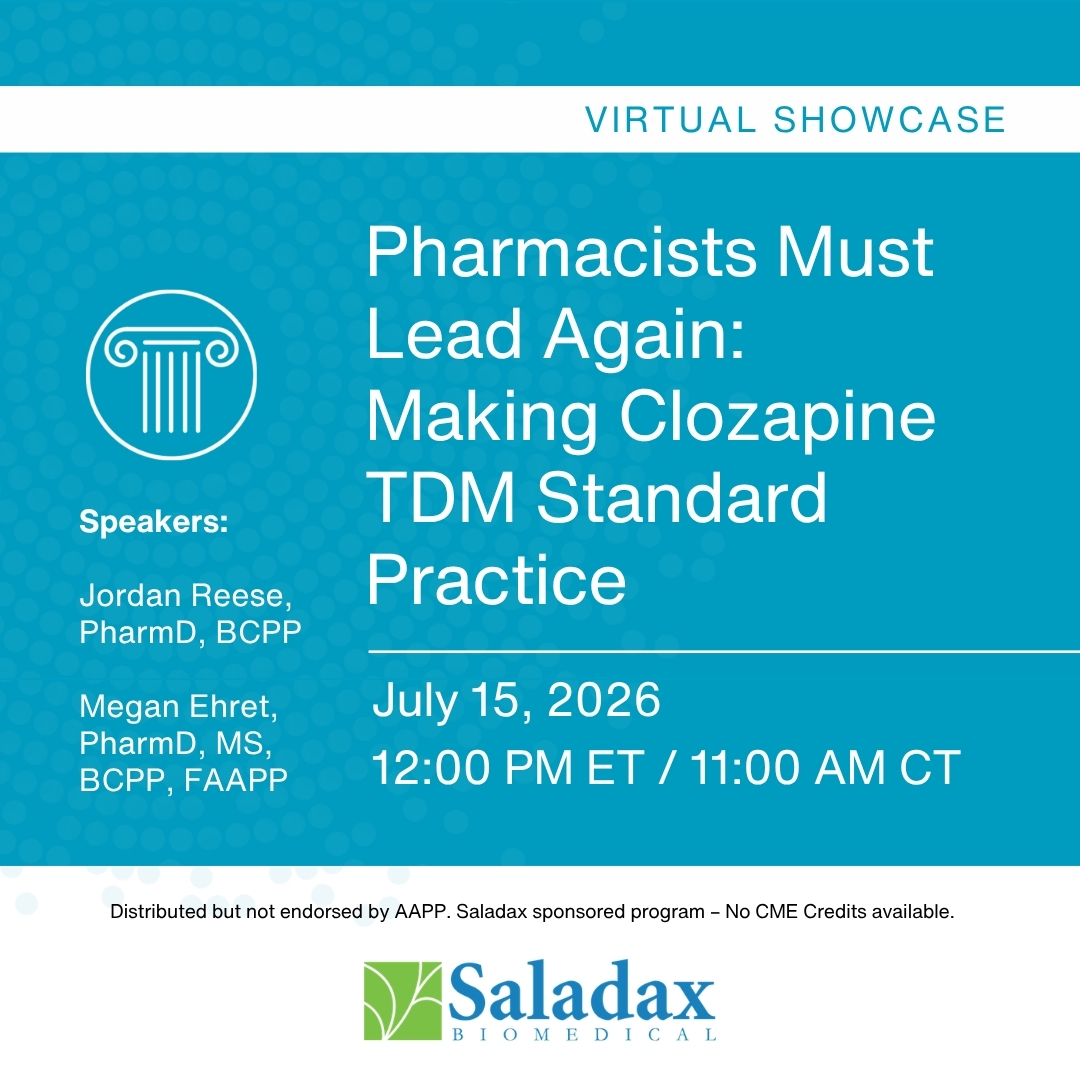
Mark your calendars for this upcoming webinar: "Pharmacists Must Lead Again: Making Clozapine TDM Standard Practice" which is available for free to all members. Register now!
The mock exam is composed of 150 questions based on the content domains and knowledge statements included in the BPS content outline. Register today and practice, practice, practice!

This 2-hour webinar focuses on developing appropriate techniques for answering standardized questions more accurately, identifying common issues in testing that may be hurting your performance, and analyzing your testing performance to improve accuracy, pacing, and endurance. Level up your test-taking skills!
LAI Pocket Guide: Sublocade®
LAI Pocket Guide: Rykindo®

No summary available
No summary available

No summary available

No summary available

How quickly a year comes and goes! It’s hard to believe that it’s been nearly a full 12 months since I assumed the role as your President. As I prepare to hand off the reins to Incoming President Michelle Geier on July 1st and reflect back on the year, it’s fun to think about what has been accomplished. The AAPP Board of Directors has been busy and has engaged in activities that are likely to impact AAPP’s trajectory into the future.

Pharmacy education plays a pivotal role in shaping the future of health care professionals. As pharmacy educators, it is our responsibility to create an inclusive and supportive learning environment for all learners, regardless of their background or experience.
Improving mental health equity is a daunting topic to consider. Diversity, Equity, and Inclusion (DEI) work involves acknowledging the current state as being unacceptable. And being such a vast issue, one can feel at a loss as to what can be done to improve it. When seeking concrete, actionable steps for improving equity in your community, the essential word is “community”.

Viana Salinas, PharmD, has tips for pharmacy trainees working in an interdisciplinary team! As a current trainee, both personal and professional growth are key to avoid undermining my potential and success. Attaining growth in both simply cannot be taught, but must be achieved through learning experiences that an individual is presented with.

My teaching philosophy is deeply influenced by my mother, who dedicated her life to her students. From her, I learned that every individual deserves to be treated with dignity, respect, and compassion. I strive to create a nurturing environment where each learner feels supported, recognizing that they are unique individuals with their own stories, backgrounds, and challenges.

Generations are often used to define an age cohort of people, typically spanning a 15–20-year period.1 The current pharmacy workforce is composed of three generations; Baby Boomers (born 1946-1964), Generation X (born 1965 to 1980), and Millennials (born 1980-1996). The next generation to enter pharmacy school and the workforce is Generation Z (Gen Z) born 1997-2012.
View results of the AAPP 2024 Residency Program Director Survey. Responses represent 2/3 of PGY2 psychiatric resident slots currently available.

2024 Residency Program Director Survey Results AnnouncedPrecepting Gen Z LearnersCreating an Inclusive Environment in EducationIntegrating Interdisciplinary Learning in Practice

It never ceases to amaze me how quickly the months and years pass. Seems like yesterday we were at AAPP 2024 with many of you, and now we are in the final weeks of 2024 fresh off our November Board retreat where we evaluated goals, strategies, and measures of success for your association. During the retreat, we set our eyes on the future and acted to evolve our strategic planning processes to be more fluid and continual to support quick reaction and shifts as needed.

We know you are living and breathing the rapidly changing health care and pharmacy environment we operate within, and we urge you to plan for how you and your organization can best position psychiatric pharmacy. As AAPP enters this strategic planning cycle and begins to consider future directions and actions, we will be working to define the role of psychiatric pharmacists in these areas so that others don't do so on our behalf.
Complete your volunteer interest profile/application on or before November 19! AAPP is truly a member-driven organization with 1 in 6 members volunteering for AAPP in some capacity. From now through November 19, AAPP is encouraging members to sign up to serve on one of over 25 committees, councils, editorial boards, and/or task forces.
The 2023-2024 academic year has been another outstanding period for our AAPP collegiate chapters, showcasing their dedication to promoting psychiatric pharmacy and mental health awareness. Forty-seven collegiate chapters submitted annual reports, highlighting significant community service, campus activities, research, and professional growth. The 2023-2024 year also saw 64 in-person attendees to the annual AAPP meeting, with sixteen posters presented across eleven schools of pharmacy.

Completion of a quality improvement or research project is a common requirement of all ASHP-accredited pharmacy residencies. While many residents seem to dread this aspect of postgraduate training for various reasons, it stood out as one of my favorite components. Over and over, my patient encounters energized me with ideas of innovations I could explore to improve the quality of psychiatric care.
Opioid overdose deaths remain a prevalent issue throughout the United States, with over 81,000 reported deaths due to opioid overdose in 2023 (CDC, 2024). There is an urgent need to spread awareness regarding drugs of abuse and counterfeit drugs, as well as to reduce harm in our communities. The AAPP-University of Southern California (USC) student chapter has established our NaloxoneSC Program to do just that.