The AAPP Foundation Board of Directors is proud of the Foundation's work in 2025! See our impact in the 2025 Annual Report.

The AAPP Foundation Board of Directors is proud of the Foundation's work in 2025! See our impact in the 2025 Annual Report.
No summary available
Advanced Track Psychotropic Long-Acting Injectable Program
Coming Soon!
Coming Soon!
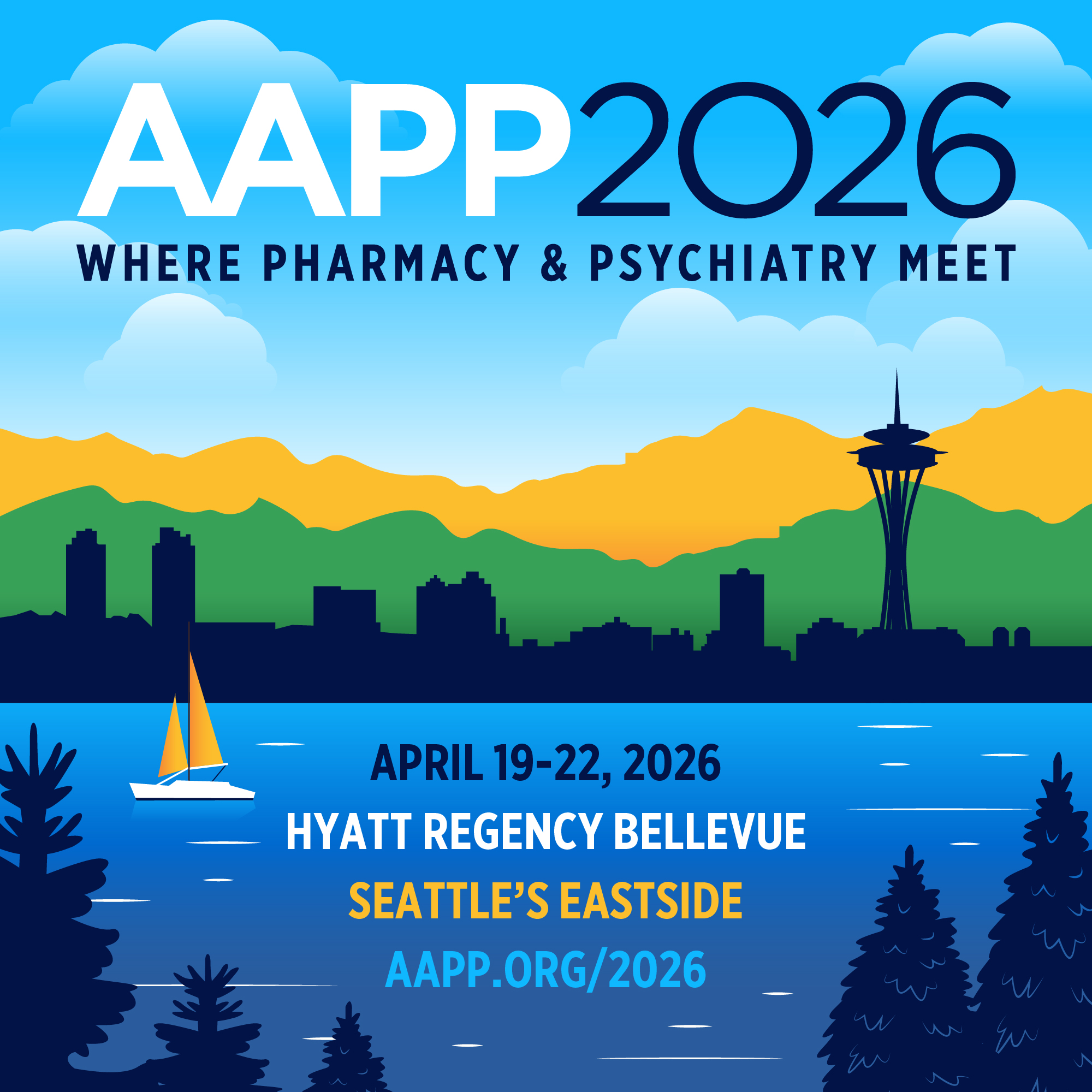
Convince Your Supervisor to Support AAPP 2026 Attendance! The merits of the AAPP Annual Meeting are undeniable. Even so, with most organizations having limited travel and education budgets, it may be necessary to show justification when selling your attendance at AAPP 2026.

Explore the 4 key steps for integrating pharmacists team members and explore 8 sample workflows illustrating how pharmacists engage with patient care.
Pharmacy residency training is considered the gold standard for pharmacists interested in practicing in direct patient care roles across community and inpatient settings. For those wishing to specialize in psychiatric pharmacy, completing a PGY2 psychiatric pharmacy residency is the most efficient process to train qualified psychiatric pharmacist specialists who are eligible to become board-certified in psychiatric pharmacy (BCPP).
No summary available
No summary available
AAPP envisions a world where all individuals living with mental illness receive safe, appropriate, and effective treatment. To achieve that, it is important to promote practices that reflect the best current evidence available. Thus, over time, all content will either be updated or removed from the web site.
What you need to know about stimulant versus non-stimulant treatment options for ADHD.
What you need to know about dose adjustments.
What you need to know about hwo to take your medication.
What you need to know about measuring response to medications.
Carla Cobb, PharmD, BCPP
What you need to know about mental health apps.
What you need to know about self-rated scales.
Psychiatric pharmacy continues to grow and look to the future with a focus on helping individuals recover from mental health and substance use disorders. The American Association of Psychiatric Pharmacists (AAPP) considers Board Certified Psychiatric Pharmacist (BCPP) the gold standard credential that all psychiatric pharmacists should attain to demonstrate specialized knowledge and expertise in psychiatry.

Grant Payments: Grant awards will be paid with a mailed check. All grant awards will be paid in full (100%) in 1 single payment, unless the grant application specifies otherwise. Overhead, Facilities, & Administration Fees: As an approved 501(c)3 organization, the AAPP Foundation's policy is to not pay overhead, facilitates, or administration fees. These fees should not be included in grant budgets.

This mosaic was populated and revealed during CPNP 2022 in San Antonio, Texas by Annual Meeting attendees. Thank you to the CPNP/AAPP Foundation for co-sponsoring this experience!

Dr. Jennifer Nelson is a psychiatric pharmacist working for one of the nation’s largest correctional systems, Dallas County Jail. Find out how her work managing psychiatric medications for pregnant inmates is highly valued by the medical team and obstetrician.

Dr. Rachel Bauer is a psychiatric pharmacist working for the George E. Wahlen Veterans Affairs (VA) Medical Center to help patients stay out of the hospital after an admission. Find out how her work coordinating transitions of care is reducing hospitals readmissions.
A 2019 survey identified significant variability of practice characteristics among outpatient psychiatric pharmacists (OPPs), including prescriptive authority. In response to this variability, AAPP launched a project to build consensus and develop practice model statements for psychiatric pharmacists providing direct care in an outpatient setting.
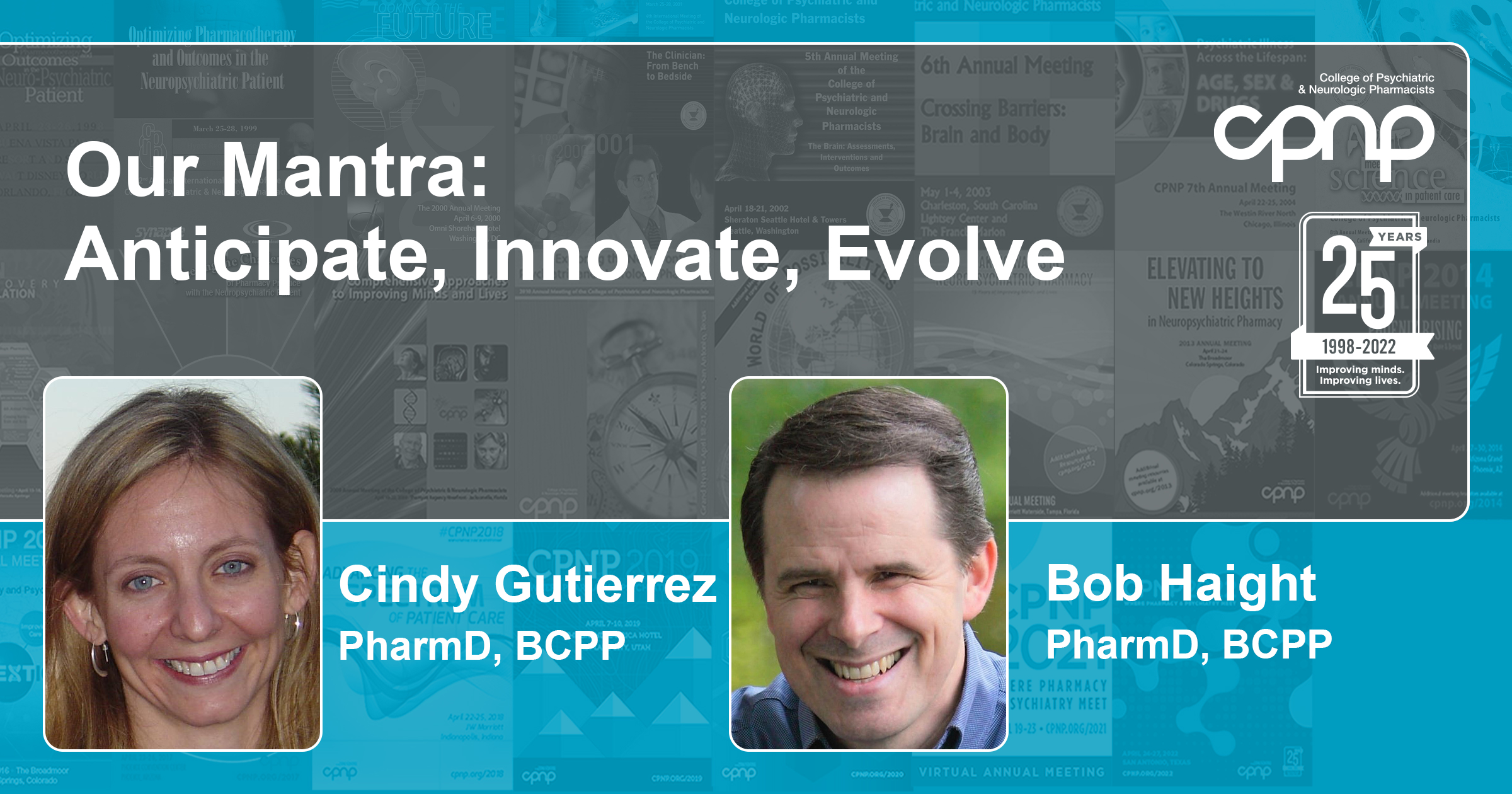
Cindy Gutierrez, PharmD, BCPP CPNP/AAPP President-Elect Associate Chief, Clinical Pharmacy Programs South Texas Veterans Health Care System