If you're planning to sit for the BCPP exam or simply want to have the core knowledge of the psychiatric specialty practice at your fingertips, purchase the Review Book for your library.

If you're planning to sit for the BCPP exam or simply want to have the core knowledge of the psychiatric specialty practice at your fingertips, purchase the Review Book for your library.
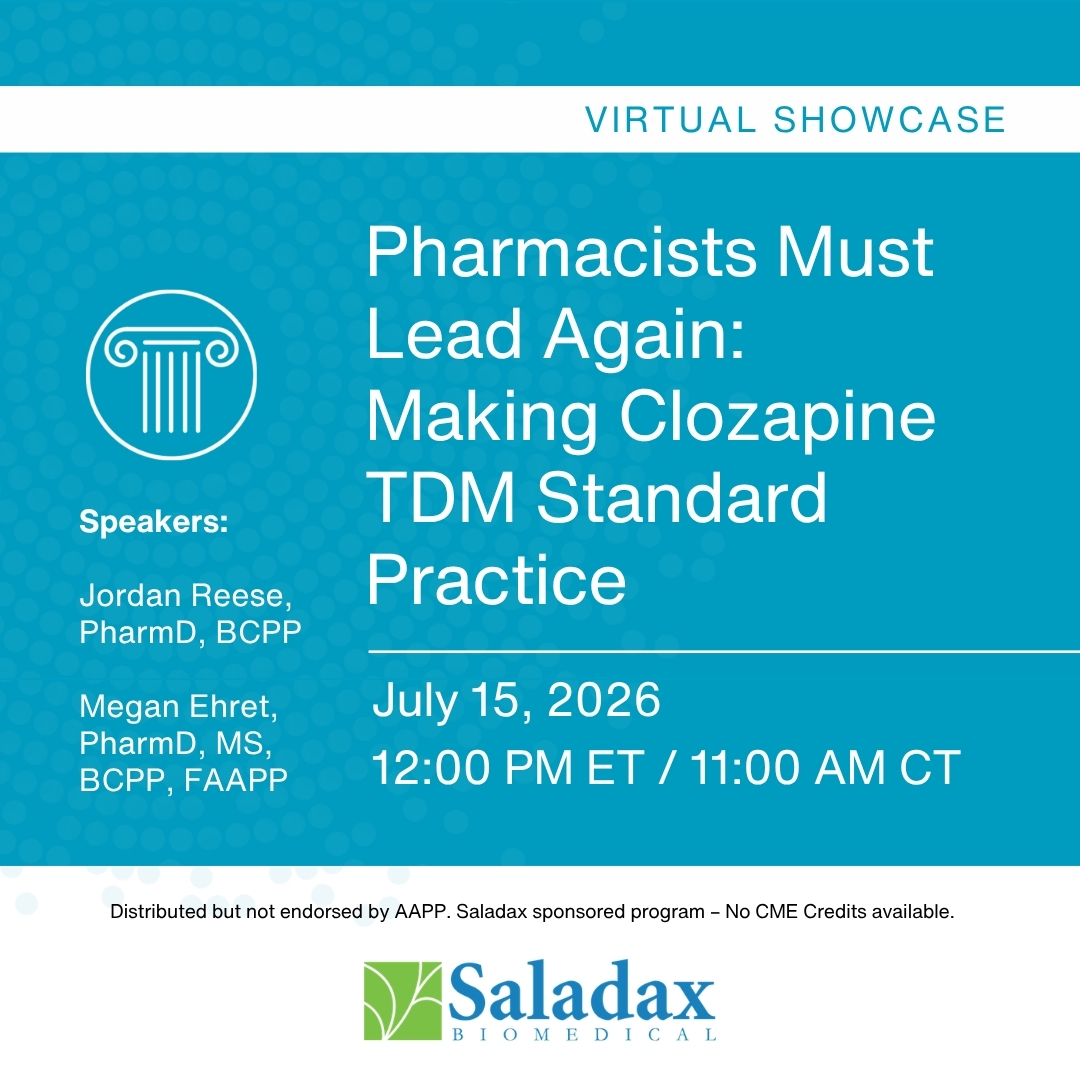
Missed the live webinar? "Pharmacists Must Lead Again: Making Clozapine TDM Standard Practice" was presented on July 15, 2026, and the recording is now available to watch anytime. Registration remains open, and the webinar is free for AAPP members.
No summary available

Before we turn our attention fully to the months ahead, I want to take a moment to look back at our wonderful Annual Meeting this past spring in Bellevue, Washington. The Pacific Northwest welcomed 713 attendees in person, with another 236 joining virtually. More than half of attendees were BCPPs, and we had representation from 27 states and five countries. We were also thrilled to welcome 144 students, whose enthusiasm and engagement brought a ton of energy to the meeting!

No summary available
There is a shortage of psychiatric pharmacy providers, and patients have unmet needs that can be filled by these individuals. AAPP's position paper describes the expertise and skills of psychiatric pharmacists and the associated positive outcomes for patients with these disorders. This paper also outlines barriers to the provision of services by psychiatric pharmacists and presents action items aimed at effecting change.
Improve your peer review skills! Discover the components to evaluate, the role of the peer reviewer, the skills necessary to critically evaluate a manuscript, and how to provide feedback to authors and journal editors.
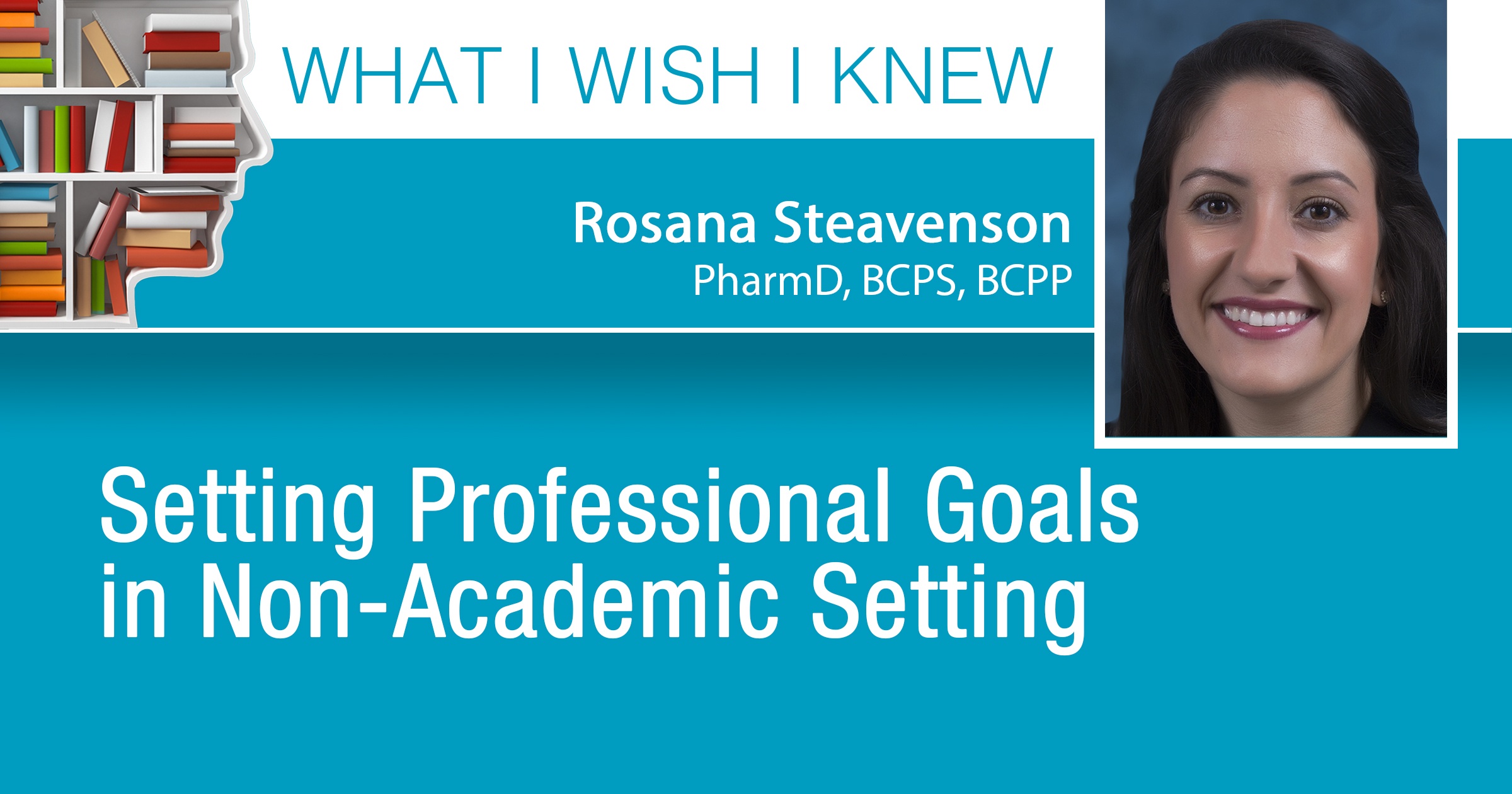
Dr. Rosana Steavenson, PharmD, BCPS, BCPP discusses setting goals, using your values to inform goals, and setting professional goals in a non-academic setting.
If you are a pharmacist, practitioner, physician, educator, scientist, administrator, resident/fellow or student involved in the pharmaceutical care of individuals living with psychiatric and/or substance use disorders or have an interest in this area, we invite you to join the American Association of Psychiatric Pharmacists (AAPP).
No summary available
Please help AAPP Foundation support its important initiatives by donating today. While checking out, please consider making your donation a recurring monthly or annual contribution.
See how board-certified psychiatric pharmacists are well positioned to manage medications for people with mental health conditions to address psychiatric workforce shortages. Regulatory changes can expand their impact on patient care.

AAPP’s harm reduction policy brief outlines recommended policy reforms that prioritize public health, person-centered care, and the perspectives of people who use drugs while reducing barriers that limit engagement with care.

AAPP’s newest policy calls for public policies that expand access to evidence-based harm reduction services, including overdose prevention resources, syringe services, and other measures that reduce the health risks associated with substance use. It emphasizes that harm reduction is a critical public health strategy that saves lives, improves engagement in care, and should be supported through legislation, funding, and the removal of barriers to access.

Brexpiprazole, when used as maintenance treatment for adolescents with schizophrenia, has a safety profile generally consistent with that observed in adult patients.

A new CDC study, Morbidity and Mortality Weekly Report (MMWR): Buprenorphine Dispensed by Pharmacies and Administered in Emergency Departments in Urban and Rural Areas — United States, 2019–2025 examines access to buprenorphine in urban and rural communities from 2019–2025. The findings show progress in expanding access to treatment, while also identifying continued opportunities to help more people start and stay in care including strengthening pharmacy availability.
This document highlights 4 empirically supported treatment suggestions for SUD/PSU in youth. Despite the magnitude of the problem, there is a paucity of safe and effective treatments for adolescents and young adults with SUD/PSU, suggesting the urgent need for additional research.
No summary available
In this study, GLP-1 RA initiation was associated with lower mortality and cardiovascular events compared to SGLT2 inhibitor initiation, with greater absolute reductions in SMI.
This paper provides an overview of recent advances in the use of psychedelics as medicine, along with research needs, safety considerations, and the system capacity and infrastructure needed to support their use.
These results suggest that adolescent and past-year alcohol use may differentially impact habitual responding and attentional bias towards non-drug reward cues.
Most of the sample did not engage with hospital or substance use treatment services after a nonfatal overdose. Negative prior experiences and fear of negative consequences were major barriers in this sample.
This cross-sectional study found divergent age- and sex-specific patterns from 2021 through 2024.
Among adolescents who vaped nicotine and were undergoing substance use disorder treatment, this study observed an abrupt increase in cotinine concentrations from 2023 to 2025.
This pilot trial indicates that the ADS Program is feasible, safe, and potentially effective in supporting self-management of SAC.