Find more information about a specific future annual meeting below. AAPP 2026 Annual Meeting Hyatt Regency Bellevue April 19-22, 2026 On Seattle's Eastside, Bellevue, WA AAPP 2027 Annual Meeting The Galt House April 4-7, 2027 Louisville, KY

Find more information about a specific future annual meeting below. AAPP 2026 Annual Meeting Hyatt Regency Bellevue April 19-22, 2026 On Seattle's Eastside, Bellevue, WA AAPP 2027 Annual Meeting The Galt House April 4-7, 2027 Louisville, KY
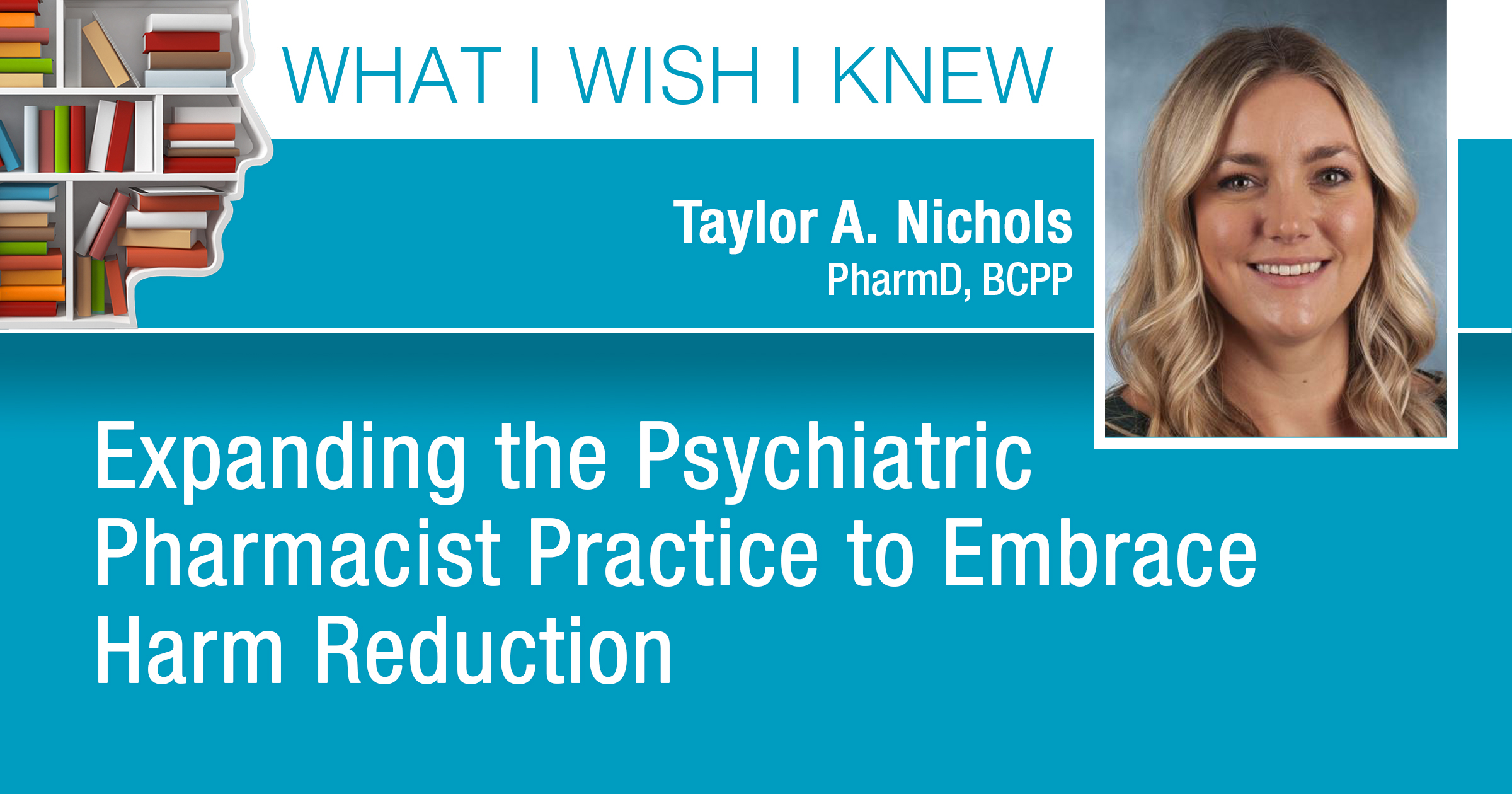
Taylor A. Nichols, PharmD, BCPP Clinical Pharmacist Practitioner - Mental Health/Substance Use Disorders Phoenix VA Health Care System Phoenix, AZ
Find more information about a specific past meeting below.
No summary available
No summary available
The “What I Wish I Knew” series of articles is a service of CPNP’s Resident and New Practitioner Committee. Articles are intended to provide advice from experts for students, residents, and new practitioners. Articles are not intended to provide in-depth disease state or pharmacotherapy information nor replace any peer-reviewed educational materials.
Dr. Austin Smith, PharmD, BCPP Mental Health and Substance Use Disorders – Clinical Pharmacy Practitioner Robert J. Dole Veterans Affairs Medical Center Dr. Suzanne Azzazy, DO Geriatric Psychiatrist Veterans Affairs Tennessee Valley Healthcare System
Brooke D. Butler, PharmD, BCPP, BCGP Mental Health Clinical Pharmacist Specialist Carl Vinson VA Medical Center Dublin, GA
The AAPP Board and Government Affairs Committee have identified policy priorities which reflect the identity of our organization, help us work on behalf of our patients, serve our members’ interests, and create an action plan for best targeted impact. The advocacy fact sheets below support these policy priorities.
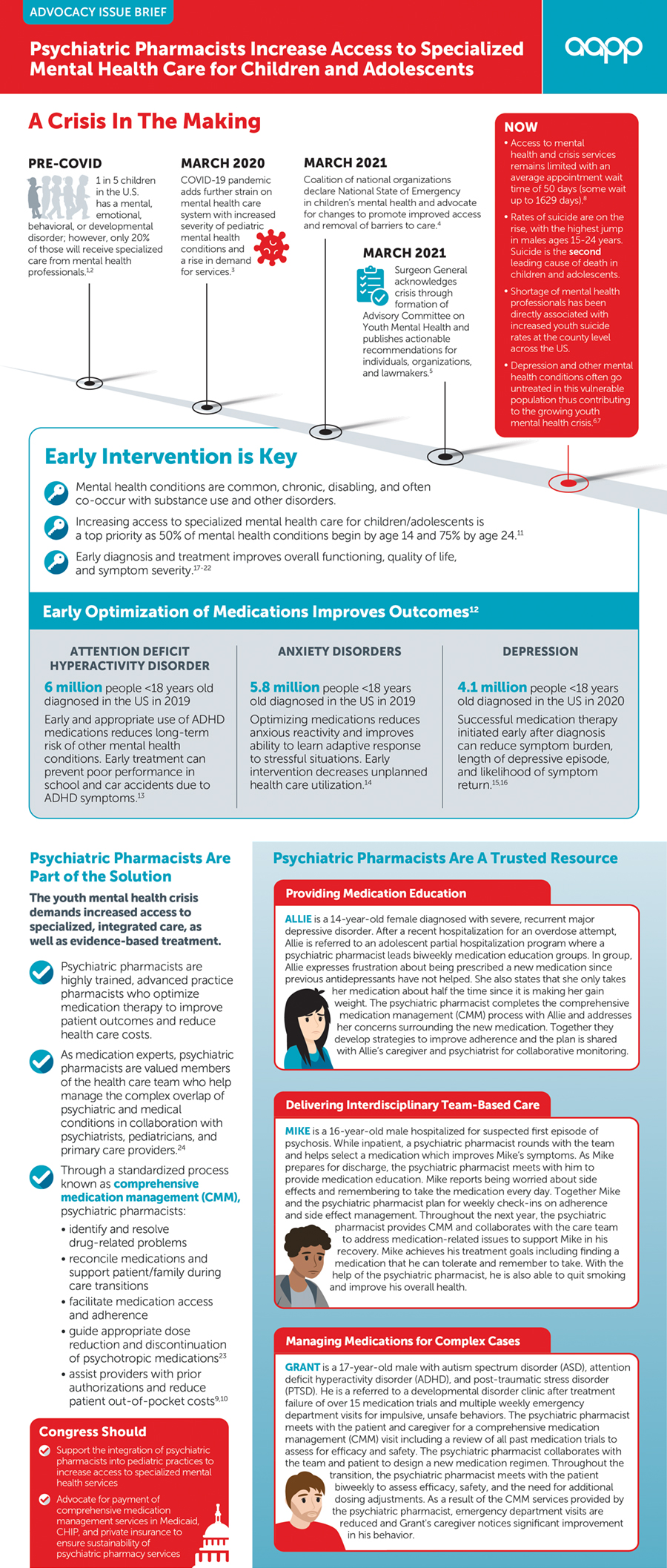
Access to specialized mental health and crisis professionals for children and adolescents is severely limited contributing to the growing youth mental health crisis. This issue brief outlines how psychiatric pharmacists are part of the solution to achieve both early intervention and optimization of medications to improve outcomes.
Psychiatric pharmacists have enaged in team-based care for 40+ years, and the research is overwhelmingly positive about their contribution to access, outcomes and cost. Given the diverse practice models in use today, you can find results of pharmacist contributions to most types of mental health practice settings.
This award will recognize individual AAPP members who impact change by benefiting access to care for individuals living with mental illness and/or by advancing the profession of psychiatric pharmacy through advocacy with policymakers and/or decision-makers.
This award will recognize individual AAPP member efforts and accomplishments in increasing patient access to high quality mental health care in exceptional and distinctive ways. This may include activities that increase access to psychiatric pharmacist-led interprofessional care. Examples include reduction and/or mitigation of social determinants of health for people living with mental illness, increased access to novel treatments and/or clinical interventions through research, etc.
The Judith J. Saklad Memorial Award celebrates the life and work of the late Judith J. Saklad. Dr.
Apply Here 2025 Class of AAPP Fellows The AAPP Fellow Program Is Intended To: Grant recognition to individuals demonstrating excellence in advancing the practice of psychiatric pharmacy.
Rachel Bauer, PharmD, BCPS, BCPP Clinical Pharmacist Salt Lake City, UT
Dr. Katie Tuck (Chamberlain), PharmD, BCPP, BCPS Assistant Professor of Pharmacy Practice – Psychiatry Regis University School of Pharmacy Denver, CO
Michelle Colvard, PharmD, BCPP Clinical Pharmacist Practitioner, Substance Use Disorders VA Tennessee Valley Healthcare System Nashville, Tennessee
Traci Turner Cole, PharmD, BCPP Mental Health Clinical Pharmacist Practitioner Chillicothe Veterans Affairs Medical Center Chillicothe, OH

In this JAMA Pediatrics article presenting the results of a nationally representative survey study of US adolescents and young adults, a fifth reported using AI chatbots for mental health advice.
This report examines data from the Centers for Disease Control and Prevention (CDC) and other federal sources.
This study of Medicaid records from 29,193 women found that pregnant women who received OUD treatment, including medication, talk-based therapies, or both, had significantly better pregnancy outcomes than those who received no treatment.

Tianeptine or “gas station heroin” is readily available and a public health concern. Access this toolkit focused on mechanism of misuse, clinical presentation, and management of acute intoxication and withdrawal among other timely topics.
Widely known as "gas station heroin," tianeptine is illegal or unapproved for medical use in the U.S. but readily available in unregulated convenience stores and online. AAPP and author Sarah Thomason are providing an important toolkit addressing tianeptine’s mechanism of misuse, clinical presentation, and management of acute intoxication and withdrawal among other topics. Check out this timely member resource today.