
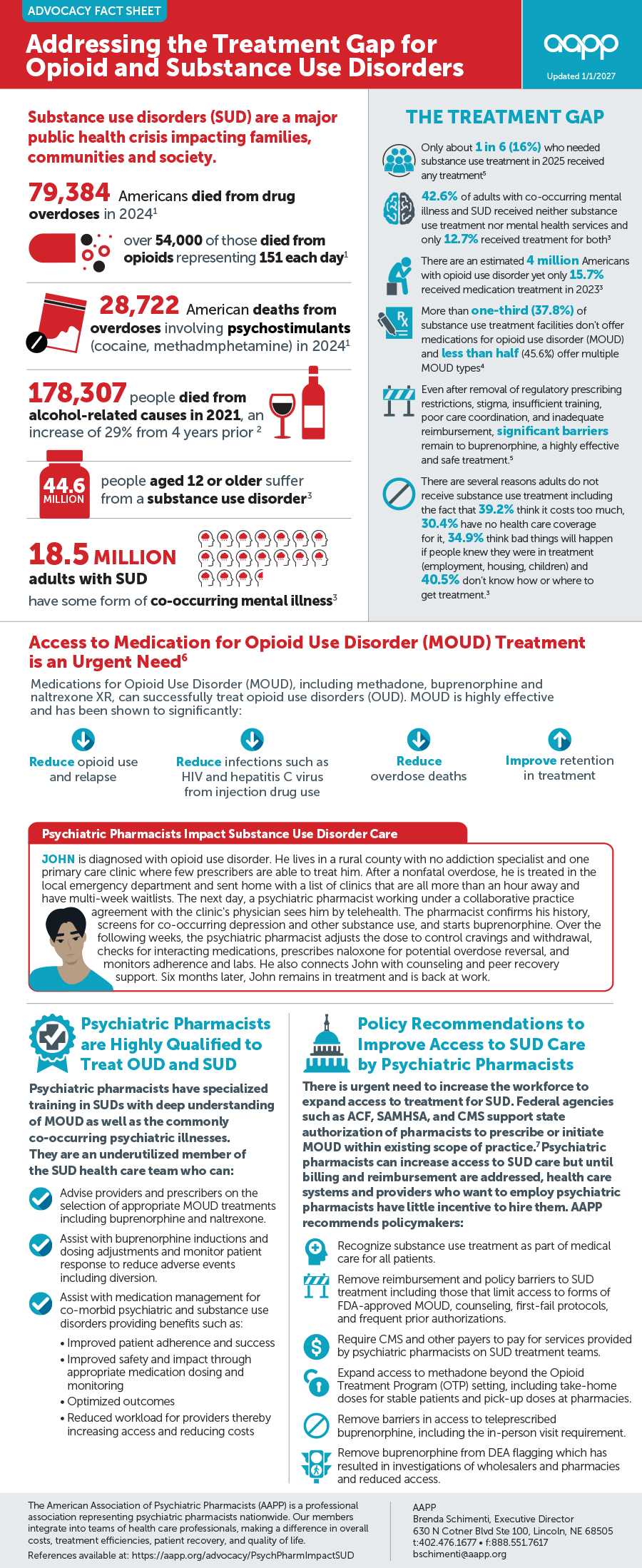
 Download this fact sheet as a PDF to save and print.
References are located at the bottom of this page.
References
- Garnett M, Miniño A. Drug Overdose Deaths in the United States, 2023–2024. National Center for Health Statistics (U.S.); 2026 Jan 29. DOI: 10.15620/cdc/174639.
- Esser MB, Sherk A, Liu Y, Naimi TS. Deaths from Excessive Alcohol Use — United States, 2016–2021. MMWR Morb Mortal Wkly Rep. 2024 Feb 29;73(8):154-161. Centers for Disease Control MMWR Office. DOI: 10.15585/mmwr.mm7308a1.
- NSDUH 2025 Report..
- Park TW, Shuey B, Liebschutz J, Cantor J, Anderson TS. Treatment Approaches for Opioid Use Disorder Offered in US Substance Use Treatment Facilities. JAMA. 2024 Aug 13;332(6):502. American Medical Association (AMA). DOI: 10.1001/jama.2024.11913.
- Mackey K, Veazie S, Anderson J, Bourne D, Peterson K. Barriers and Facilitators to the Use of Medications for Opioid Use Disorder: a Rapid Review. J GEN INTERN MED. 2020 Dec;35(S3):954-963. Springer Science and Business Media LLC. DOI: 10.1007/s11606-020-06257-4.
- Overview of Findings from the 2003 National Survey on Drug Use and Health. PsycEXTRA Dataset. 2004. American Psychological Association (APA). DOI: 10.1037/e400452005-001.
- Substance Abuse and Mental Health Services Administration, Administration for Children and Families, Centers for Medicare & Medicaid Services. Dear colleague letter on expanding access to medications for opioid use disorder through pharmacist state scope-of-practice flexibility.. U.S. Department of Health and Human Services. Administration for Children and Families; 2026, June.